2019年12月17日星期二

"Housewide customization" smart home can not cross the Internet of things?

Since 2013, the home industry has circulated two popular concepts. “Smart Home” and “Housewide Customization” have become the goals of many home-owner companies. However, in the past few years, the development of the two fields has not been the same.

Whole house customization is still sought after, and many whole-house custom companies are also listed and appear to be bustling. On the other hand, smart homes are also a little high and low, lacking enough stamina, and even being evaluated as “stagnation”. How do we view smart home development? What is the bottleneck? Let's look at these "internal causes."

Smart home can not cross the Internet of things?

On December 14 last year, the Ministry of Industry and Information Technology formally issued the "Three-year Action Plan for Promoting the Next-Generation Artificial Intelligence Industry Development (2018-2020)" (referred to as the "Plan"), proposing the integration of information technology and manufacturing technology into the main line and a new generation. The industrialization and integration application of artificial intelligence technology will be the focus. It will promote the deep integration of artificial intelligence and manufacturing, and accelerate the construction of powerful manufacturing and network power. The "plan" mentioned four main tasks. It also includes intelligent products such as smart home products.

The above "plan" put forward four main tasks. Among them, the first task is to focus on cultivating and developing intelligent networked vehicles, intelligent service robots, smart drones, medical image-assisted diagnostic systems, video image identification systems, intelligent voice interactive systems, intelligent translation systems, and smart home products. Intelligent products promote the integration of smart products in the economic society.

For smart home companies, this is good news. Presumably the country will also launch relevant support policies to some extent. However, people in the industry believe that the progress of smart homes is stuck in the “Internet of things” link. If they cannot solve the technical problems, they will not be able to bring about a leap forward in the smart home industry.

Smart home stay at the level of easy application?

More people now predict that in the coming year, smart homes will be more likely to stay at the level of simple applications that are not deep enough. The development and application of simple intelligent hardware can no longer meet the needs of today's users for smart homes. Some people even suggested that smart homes that do not use the Internet of Things are not really smart homes. The Internet of Things is not new, and it has been rampant since the end of 2009. Unfortunately, it has so far been self-government.

In the field of Internet of things, the unification of communication technology is of great significance, but if there is no strong organization to promote this process must be slow.

In the field of communication protocols, there are currently a series of standards including TCP/IP, MQTT, HTTP, and CoAP, which are competing to play a role in transmitting messages between the Internet of Things and cloud devices. Communication standards and communication protocols are not uniform, resulting in equipment, products, and communication standards and interfaces manufactured by various manufacturers. This is the first problem that must be solved for everything connected to the Internet of Things, and it is also a barrier to the development of smart homes.

Smart homes have also been affected as part of the home industry. The conditions of the real estate market in the past two years have affected the home industry, and there hasn't been much improvement in the customer base for decoration and installation of smart homes.

Whole House Intelligence How PK Whole House Custom?

The smart home market started with many single products, including smart home appliances, smart sockets, routers for Internet access, lighting systems, entertainment equipment, health and fitness equipment, and security systems.

But after all, they did not win the hearts of consumers, and regardless of the limited role that these single products can play, they are not yet in demand. Many of these applications are not smooth, or there are complicated use processes. These conditions basically limit the continued progress of smart home products. At the same time, it is difficult to shake business from a single intelligent product into the Internet of Things.

On the other hand, smart home as a brand new product is different from the whole house customization. Whole house customization is gradually personalized on the basis of the past, and companies have considerable experience and consumers also have a sense of consumption. However, smart homes require users to accept new things. Naturally more difficult.

In general, the smart home products that manufacturers can provide at this stage still have some deviations from the understanding of consumers. Most manufacturers simply add Wi-Fi modules to the products and control the switch settings of the products through mobile phones. There is still a certain distance from real house intelligence.

Market direction

Smart home future market dazzling

Current smart home companies are focusing their efforts on 13 areas including energy and utilities, smart locks, kitchens and appliances, surveillance and security, home robotics, health and alarm systems. According to McKinsey's "Immediate Internet of Things Potential" report, the output value of smart homes in 2025 will reach 200-350 billion U.S. dollars.

In the consumer's expectation, smart homes should be all home modules to complete life tasks together. If many brands only form their own islands of information and products, it will be very difficult for them to realize real interconnection for a long time. On the basis of solving the technology promotion of the Internet of Things, smart homes in the future tend to be more automated and service-oriented.

High-Frequency Pcb

High-Frequency Pcb,High Frequency Pcb Design,High Frequency Pcb Design Software,High Frequency Pcb Materials

PCB Assembly Co., Lt d , http://www.nbmultilayerpcb.com

Smart car strategic development span 15 years

Smart cars have become another protagonist in emerging industries. The Development and Reform Commission issued the "Smart Vehicles Innovation and Development Strategy" opinion on the 5th. The goal is to reach 50% of new cars in smart cars by 2020, and to be the first to build a smart car powerhouse by 2035.

The plan proposes that by 2020 the technical innovation, industrial ecology, road network facilities, regulatory standards, product supervision and information security architecture of standard smart cars will basically take shape. Mid-to-high-level smart cars have achieved market application, and demonstration operations in key regions have achieved results. The coverage rate of LTE-V2X (Vehicle Wireless Communication Network) in major cities and highways reaches 90%, and Beidou's high-precision space-time service achieves global coverage.

By 2025, the technical innovation, industrial ecology, road network facilities, regulatory standards, product supervision and information security system of the standard smart cars will be fully formed. The new car is basically intelligent, and high-level smart cars are used in large-scale applications. "Human-vehicle-road-cloud" achieves a high degree of synergy, and the new-generation automotive wireless communication network (5G-V2X) basically meets the development needs of smart cars. By 2035, it will be the first to build a smart car powerhouse, and the whole nation will share a safe, efficient, green and civilized smart car society.

From the “three steps” of the development strategy of smart cars, the development path of the smart automobile industry is clear. To achieve the above strategic goals, it is necessary to break through the key core technologies of smart cars. Key breakthroughs in new electronic and electrical information architecture, multi-class sensor fusion awareness, new smart terminals, automotive intelligent computing platform, automotive wireless communication network (LTE-V2X/5G-V2X), high-precision spatio-temporal service and vehicle basic maps, cloud Control basic platform and other common crossover technologies.

The plan also proposes that smart car demonstration operations will be carried out through major construction projects such as the Beijing Olympic Winter Olympics Committee and the Tongzhou Sub-center Intelligent Transportation and the Xiong'an New District Smart City. The demonstration operation will also focus on the use of relatively closed areas such as airports, ports, mining areas, industrial parks and tourist attractions, as well as open areas such as urban bus routes set by related departments.

In fact, except at the policy level, the Internet giants such as BAT and a number of automotive groups have already begun to deploy smart vehicles in large numbers and have achieved significant results. Three months ago, the giants Tencent and Baidu released smart cars in the same day and both are planning to mass production in 2018.

From a technical perspective, automobiles are always an important carrier for the application of new technologies. As new technologies such as information and communication, Internet of Things, big data, cloud computing, and artificial intelligence are widely used in the automotive field, automobiles are being accelerated by mechanical products that are controlled by humans. With intelligent system-controlled intelligent product changes, smart cars have become the strategic commanding height of industrial technology.

Optical Fiber Passive Components

Optical Fiber Passive Components,High Quality Optical Fiber Passive Component,Electronic Components & Supplies, Fibre Optic Passive Components

Optical test instruments,Fiber Optic Equipment Co., Lt d , http://www.nbopticfiber.com

The express delivery industry calls for smart manufacturing to "renovate" to stimulate the development of smart supply chain

The smart supply chain has five major advantages: First, it can provide transparent data links, full visibility of the supply chain process data, and second, it can help realize supply chain service innovation based on customer experience; Third, it can support multi-platform development and help enterprises. Have an international perspective...

"Made in China 2025" has received more and more attention since it was first proposed in December 2014. The direction of upgrading of China's manufacturing industry is: Industry 4.0: Internet + Manufacturing, Industry 4.0 drives a new round of industrial revolution. Features are interconnected.

Although the current "Made in China 2025" and "Industry 4.0" have become the hot words for people's business development, there is still a long way to go for the express delivery industry.

The express delivery industry calls for smart manufacturing to "renovate"

“How many people and friends at the scene work in private courier companies? How many people are willing to work in private courier companies?” — There are few show-callers. On January 13, at the Tsinghua University China Manufacturing and Logistics Industry Summit Forum, Mr. Xiang Feng, Vice President of Yuantong made such a small survey. Most of the participants in the conference are Tsinghua University, and professors, teachers, and students from the Department of Industrial Engineering of colleges and universities across the country. The lack of talents in intelligent manufacturing of private express delivery companies can be seen from this.

Although our express delivery volume has grown from 5.7 billion to 40.1 billion pieces in five years, we have ranked No. 1 in the world for four consecutive years, and the parcel delivery volume exceeds developed economies such as the United States, Japan and Europe, and contribute more than 50% to the world's growth. However, China is still not a strong country for express delivery. No single private express delivery company has a strong or independent, professional industrial engineering research department. How to make China's express delivery companies catch up with China's smart manufacturing, and China's manufacturing of 2025, the industry's 4.0 east wind to become the entire express delivery industry must consider.

At present, China's express delivery industry is still in the stage of mechanization automation. During the “Double 11” period in 2017, major private express delivery companies started to automate sorting equipment in Gamar in order to cope with the peak period of business, opening a new “machine substitution” journey. The "Double 11" of the past years has become the test field for new models and new technologies for express delivery and logistics companies. Informatization, automation, greenization, and internationalization have become the common choices of the E-commerce era express delivery companies.

With the development of the manufacturing industry, the division of labor continues to be refined, and express delivery companies are constantly “opening up and down the flow, forming an industrial chain, drawing great concentric circles, and constructing an eco-sphere”. From a single focus on their core competencies, they are beginning to put themselves in A link in the supply chain. The market competition that the express delivery companies are in is no longer just the competition among express delivery companies, but the competition between supply chain and supply chain. In order to win the market, in addition to constantly improving their core competitiveness, express delivery companies must also strengthen their collaboration or integration with upstream and downstream companies in order to increase the efficiency of the entire supply chain and improve the quality of final products and customer service. Continue to gain competitive advantage.

Smart Manufacturing Inspires Smart Supply Chain Development

In the context of technology upgrades and consumer upgrades, China's e-commerce has entered a new retail, all-channel era. This makes our express delivery companies face more difficulties and challenges. On the one hand, express delivery companies must meet the new requirements that consumers are faster, more convenient, and have better service attitudes. They must also deal with challenges such as self-built logistics and third-party logistics of e-commerce companies such as JD.com, as well as directly dealing with international giants. Other cross-border business competition. In addition, in the transformation and upgrading of “machine substitution”, express delivery companies must invest more financial resources and technical R&D efforts to update and upgrade their automation and intelligent equipment.

But for express delivery companies, not using automation equipment means improving their efficiency. The supply chain is based on customer needs, with the goal of improving quality and efficiency, and integrating resources as a means to achieve efficient, coordinated organizational forms such as product design, procurement, production, sales, and service. Nor is it true that companies can increase supply chain efficiency by investing in automation equipment.

Professor Zheng Li of the Department of Industrial Engineering at Tsinghua University stated at the meeting that the Industrial Revolution has created tremendous productivity and has caused tremendous changes in the social landscape. The industrial revolution has also brought a lot of digital waste while improving the efficiency of factories. When the enterprise applies automation equipment, it also needs to consider whether there is any new waste for automation for the workers and users. Is it really convenient? Is it really lean and flexible?

Tang Jie, chairman of Fenglian Group, shared the impact of smart manufacturing on the logistics industry from the perspective of fresh cold chain. Nowadays, the demand for customer scenarios is smashing the reconstruction of fresh logistics, and the formation of production-concentrated direct mining/wholesalers - large-area warehouses - pre-warehouses - family scenes/office scenes/on-road/shopping experiences - The user's supply chain process. The future regional warehouse + pre-position warehouse + full-text warehouse allocation will achieve full coverage of customer scenarios. The formation of artificial intelligence, big data, cloud computing, and unmanned aerial vehicles will create a smart supply chain revolution.

Zhang Mang, general manager of the Best Supply Chain Division stated at the meeting that with the development of omni-channel/new retail, as well as rising costs of land, labor, and operational materials, enterprises and society need a smarter supply chain. To provide more agile and flexible supply chain services to efficiently use resources to meet customer experience while reducing costs.

Zhang Mange expressed that the smart supply chain has five major advantages: First, it can provide transparent data links, full visibility of the supply chain process data, and secondly, it contributes to the realization of supply chain service innovation based on customer experience; Third, it can support multiple platforms. Expanding and helping enterprises have an international vision. Fourth, through the analysis of big data, they can lead the optimization of supply chain layout and increase the efficiency of the supply chain. Fifth, the smart supply chain can provide forward-looking support for sales and market decisions.

On October 13, 2017, the State Council issued the "Guideline for the Active Promotion of Innovation and Application of Supply Chains by the General Office of the State Council," and the new policies on the supply chain formed. Express companies engaged in supply chain services and research have gradually become an important direction for their development. For example, when Best Express launched its listing, it repeatedly emphasized its “supply chain” features. After independence, Jingdong Logistics also highlighted the “supply chain services” it can provide. . For the express companies that need to expand the moat after the listing, "smart supply chain" may be a good choice.

Maria Theresa Chandeliers

Maria Theresa Chandeliers,Chandelier,Pendant Light,Ceiling Light

Crystal Chandeliers, Ceiling Lights Co., Ltd. , http://www.nbchandeliers.com

Baidu Luqi: Unmanned vehicles face security barriers or are considered as potential "weapons"

According to the "Financial Times" reported on January 15th, Beijing time, Lu Qi, head of the Baidu Company's autopilot project, warned that self-driving cars are in danger of being turned into "weapons", which will lead to global governments restricting the automatic driving of foreign company operations. car.

As Baidu's chief operating officer (COO), Lu Qi said that security concerns may become a problem for global automakers and technology companies, including China and the United States.

"It has nothing to do with any particular government. It's about the nature of automation," said Lu Qi at the Consumer Electronics Show (CES) last week. "You have an object that can be automatically moved. By definition, it is a weapon." ."

Moreover, global regulatory authorities have not been able to keep up with the pace of development of self-driving cars. National and local governments are solving a problem: when and under what conditions to allow self-driving cars to go on the road.

Lu Qi said that multinational corporations need to go through a "high threshold" to meet local autopilot policy requirements. "The era of developing a car in one place and letting it run all over the world is over. Because by definition, a car that can be automatically moved is a weapon," he said.

Baidu is seeking to achieve diversified development, expand its business beyond core internet advertising, and expand into the field of artificial intelligence. Currently, it is investing heavily in open source self-driving car platform Apollo. At this year's CES, Baidu released Apollo 2.0 to improve platform security. Baidu also established a new 200 million U.S. dollar fund to invest in the Southeast Asian market and improve autopilot technology.

Baidu has entered into cooperation with US chip companies such as Intel Corporation and Nvidia, as well as US and European automakers such as Ford Motor and Daimler. In China, Baidu is cooperating with local automakers JAC and Beijing Automotive, which plans to start production of autonomous vehicles based on the Apollo platform as soon as next year.

Lu Qi joined Baidu from Microsoft Corp. one year ago. He believes that self-driving cars should reduce fatalities on the road, either accidentally or in the form of terrorist attacks. "In the future, if these cars see someone standing in front of them, they will not move - no matter who controls the car," he said.

He believes that despite the "great benefits" of self-driving cars, its development depends on "a frequent dialogue between companies, regulators, and politicians." "In my opinion, we still have some way to go in ensuring our safety," he said.

Lu Qi’s statement coincided with the warming of tension between China and the United States. At this year's CES, US operator AT&T withdrew its plans to sell Huawei handsets at the last minute. US regulatory security concerns are considered to be the reason for the failure of AT&T’s negotiations with Huawei.

Lu Qi said Apollo's openness will help Baidu solve the regulatory challenge. Any company can write new software code on the Apollo platform. "Apollo was developed by Baidu, but it is not Baidu," he said. "We sincerely believe that an open system can create an environment in which the best companies can participate. This is better than a company."

XY Stage

Metal Processing Machinery,Bending Machine,Mechanical Engraving Machine,Stepper Motor Drive

DC Motor Co., Ltd. , http://www.nbelectricmotor.com

Russian naval robot mine sweeping unmanned technology military applications are getting more and more diverse

According to the Russian "Izvestia" website reported on January 11, Russia's latest minesweeper will be equipped with domestic mine-sweeping robots. The "Diamond" system allows seafarers to remove obstacles at a safe distance without using common mine sweepers. The system uses light unmanned boats (carriers for special unmanned submersibles) made of carbon fiber composite materials to search for and exclude mines. "Diamond" will replace the French unmanned system originally planned for use, and it will be equipped with a 12700 minesweeper. Experts believe that its emergence will make the Russian Navy's mine-sweeping force a higher level, which will greatly reduce the risk of seafarers.

The "Izvestia" learned from the Naval Command that the testing of the "Diamond" system had been completed and that it was first equipped on the "Alexander Obukhov" minesweeper of the Baltic Fleet. In the future, all 12700 minesweepers will be equipped with this domestic mine-sweeping system.

Navy 12700 minesweeper

"Diamonds" can be cleared at a safe distance within a few nautical miles. A minesweeper carries two light unmanned boats and releases it upon arrival at the designated waters. Carbon fiber composite hulls and low-noise engines allow the unmanned boat to “not cause any interest in mines,” but it can easily detect mines with sonars, magnetic detectors and other equipment.

The remotely piloted unmanned submersible launches from the rear of the unmanned boat and has a similar shape to a small torpedo. The tools it carries can destroy various types of mines.

"Diamonds" can work 10 kilometers away from minesweepers and find and clear mines 10 to 100 meters deep.

Navy expert Dmitry Boldenkov said that the emergence of "diamonds" means that China's mine-sweeping forces will be upgraded to a new level.

He said: "We used minesweeper's trawls to remove mines. 'Diamonds' will achieve unmanned mine clearance and avoid the danger of warships and personnel."

Boldenkov said: "The relatively cheap mines are still widely used, and they are constantly improving and even begin to have artificial intelligence. Faced with a large number of mines, even the most powerful fleets will be restricted in their movement, especially in the area. Coastal waters. To prevent this from happening, modern minesweepers are needed."

The 12700 minesweeper is used to search for and remove mines in the waters of the naval base. The first ship of the series was delivered to the navy in 2016 and there are currently three more under construction. Earlier, it was reported that the "Gorghi Kulbatov" and "Vladimir Yemelyanov" minesweeper will join the Black Sea Fleet in 2018 and 2020.

(Source: Reference News Network)

Mini Coaxial Cable

Communication Cable,Coaxial Connector,RF Connector,Electric Wire

Antenna, Communication Cable Co., Ltd. , http://www.nbantenna.com

Charging pile industry will welcome profit turning point into the industry reshuffle within three years?

At present, the construction of charging piles in our country is far less than the level set by the government planning for the completion of 4.8 million charging piles and car piles in 2020, and it is urgently needed to leapfrog development.

However, although the automotive charging service industry has broad prospects, due to China's current major market for electric vehicle promotion in the first-tier cities, high land price and other cost factors, charging pile companies feel "stressed." There is no clear profit model. How the charging service industry has reached the inflection point of profitability in the industry has become the most important task for current charging station operators.

Charging pile industry will welcome profit turning point

"Securities Daily" reporter learned that the current form of cooperation between the majority of piles and parking lots is constructed and managed by charging operators, and the parking lot management party collects electricity charges and a certain percentage of service fees. As the fees previously charged are lower than the income from parking fees, the management of the parking lot is not keen to manage the charging of parking spaces.

The reporters found that before the new energy vehicle battery life and battery capacitance is relatively low, the general battery life of about 150 kilometers battery capacity of about 15kWh. Based on this calculation, the charging and operating company will charge the user a charge service fee of 0.5 yuan-0.8 yuan per kilowatt-hour, even if the electric vehicle is full of service fees that can be charged only 7.5 yuan-12 yuan.

From this point of view, compared to the current parking fees of 10 yuan/hour in most parking lots in Beijing and cannot be covered, the business logic and profitability models cannot work, and property companies and parking lot management companies certainly will not accompany the charging company. "The use and maintenance of charge piles that are not actively managed are naturally understandable."

Zheng Xiaoyi, deputy general manager of Star Charges, also expressed the same opinion. "After all, it is a cost issue." Zheng Zhengyi believes that the current fuel costs and parking fees for parking lot owners are the core costs. When the charging service fee is lower than the parking fee, it is of course not expected that the electric pegs in the car park will be profitable.

However, a key independent variable in the profitability of the charging pile industry is changing: When the current cruising range of electric vehicles continues to increase, the corresponding battery capacity also continues to increase.

Taking the example of several mainstream electric vehicles on the market, the electric power of the Geely Emgrand EV300, Beiqi EU260, BYD e5 and Tengse 400 reached 41kWh, 41kWh, 43kWh and 62kWh, respectively. Based on this calculation, the charging service fee jumped to the range of RMB 30 to RMB 50, not only covering the depot parking fees, but also generating a huge surplus.

In this regard, Zheng Haoyi said that with the increase of new energy vehicles' life and throughput, the future unit area and unit hour revenue will continue to increase. After ushering in the profit turning point, the industry will inevitably have a series of model innovations, which will drive the enthusiasm of providing venues and power supply partners, and stimulate sales to form a virtuous circle.

Three years into the industry to reshuffle

However, despite the fact that everyone knows that charging piles are not profitable, the cakes that are not far away are so attractive.

The data shows that as of now, the number of new energy vehicles in China has exceeded 1 million, and a total of 195,000 public charging piles have been built. Judging from the above data, whether it is a new energy vehicle or a charging pile, there is still a large gap between its inventory and the target of “double 5 million.” The blue sea that experts claim is several billion yuan does not seem to be a mirage.

With the sharp increase in the number of electric vehicle users and the significant increase in tram service fees, the turning point of profitability of charging piles seems to be gradually approaching.

Zhi Ding, CEO of Ding Rui believes that the real danger of the charging pile industry will be concentrated in the next 1 to 3 years, and a large number of equipment will face aging and disrepair. Because each company owns its own assets, the vast majority of companies will not choose to integrate. As a result, operators that do not have the ability to divert traffic will "finally die."

In fact, the charging pile operators that entered the industry earlier in the year, naturally, do not want to fall on the eve of the dawn, and are struggling to reach the inflection point of the number of users and profitability. According to industry insiders, some large and widespread nationwide charging pile operators cannot come back because they have already taken hundreds or even hundreds of billions of them and can only keep moving forward.

Pang Lei, chairman of Beijing Fudian Technology, said in an interview with the "Securities Daily" reporter that some companies could not stay because they did not conduct research and business model drills at the beginning of construction. When entering the Beijing market, there was no sufficient research on the characteristics of traffic trips, characteristics of commercial distribution, the number of electric vehicles on the pile, and whether there were value-added services in the surrounding area. On this basis, it has been rash to build large-scale piles. "Every day the rate of use is not guaranteed once, and it will naturally be difficult to sustain."

Hunting Camera Accessory

CCTV Camera,Consumer Electronics,Video Camera & Accessories, Hunting Camera Accessory

Camera Co., Ltd , http://www.nbcamera.com

Popular Sensor Products Inventory at CES 2018

With the arrival of the new technological revolution, the world has begun to enter the information age. In the process of using information to serve human life, how to obtain accurate and reliable information is particularly important.

The existence and development of the sensor allows the object to have a sense of touch, taste and smell, and its greatest value is to organically combine the signal detection function with the signal processing function of the microprocessor.

In China, sensors are mainly used in automotive electronics, consumer electronics, communications electronics, medical electronics, and industrial robots. The CES exhibition held recently in Las Vegas, USA, once again put the sensor on the "hot search." In the end, what are the brightest sensor products at the show, and look at the OFweek artificial intelligence network inventory.

Hisense: Security Sensors

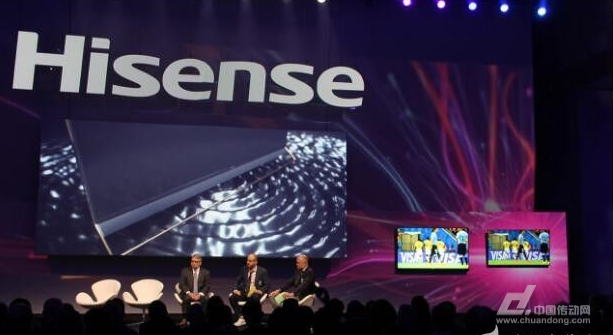
Hisense smart home is a highlight of this exhibition. Its home appliances centered on Hisense, equipped with security sensors, air environment detectors, and lighting curtains and other home equipment, formed a home intelligence solution.

Environmental testing equipment includes temperature and humidity detectors and other products, can be installed in the room temperature and humidity sensors, real-time monitoring of environmental conditions, and linkage with the air conditioning, automatic adjustment of indoor temperature, humidity; smart security equipment, including "window magnetic detector", "emergency Buttons, "flammable leak detectors", etc.

Motion Technology: Third Generation Vision Sensor L-01

During the exhibition, Speed ​​Technology launched the third-generation vision sensor L-01 for global sweeping robot manufacturers.

This is a production-level vision sensor product that has been launched once again for global industry users in eight months after it was released to domestic sweeping robot customers in May last year.

In terms of core functions, it integrates the embedded vSLAM intelligent algorithm, and the sensor has features such as precise positioning and construction, intelligent navigation, non-repeat and missed sweep, remote control, automatic repositioning, and effective recharging.

Specific indicators:

Nokia: Bed Sleep Sensor

Nokia released the bed sleep sensor NokiaSleep. By placing the sleep sensor under the mattress, the user can provide sleep monitoring data in an unconscious state. The device can not only track the nightly sleep duration, the number of interruptions, and the overall quality of sleep, it also integrates the "ifthisthenthat" network automation function (IFTTT for short), which allows the user's smart home device to synchronize with their rest time.

It is reported that the smart sleep pad equipped with this sensor is priced at about 99.95 US dollars. It is worth mentioning that if the user encounters insomnia, he will be eligible for an eight-week sleep improvement course designed by Dr. Christopher Winter.

Bosch: MEMS sensors

Bosch introduced MEMS sensor BMI088, which is said to be specially developed for UAVs/robots. It is reported that the MEMS sensor BMI088 is a high-performance inertial measurement unit (IMU) that can provide low noise and low drift in a temperature fluctuation environment. The characteristics, for both drones and robots, require very stable and high-performance IMUs.

It is worth noting that the performance, robustness, and stability of the BMI088 can be controlled with simpler, more accurate directions to dramatically improve the unmanned flight experience, even in a naturally high vibration environment.

Dr. Stefan Finkbeiner, CEO of the company, said, "Today, BMI088 joins BoschSensortec's large portfolio of MEMS sensors, making it ideal for use in high vibration environments."

Sony: Vehicle Image Sensor

Since the launch of the first on-vehicle image sensor in 2014, Sony has continued to make it a key business. At this CES exhibition, Sony introduced the “Car Eye” strategic path with the company’s image sensor as the core.

Sony provides a immersive simulation experience to the audience. Experiencers can perform 360-degree inspections around the car in dim light, backlighting and other driving environments, predict dangers in advance and avoid them.

Through the development of an image sensor that surpasses human eyes, Sony continuously improves the resolution of the picture and the dynamic range of backlight, enabling high-sensitivity, telephoto, and wide-angle viewing even in dark light environments. When difficult to identify with the naked eye, help humans effectively gain insight into the surrounding driving environment.

Korea: Next Generation Nano Semiconductor Image Sensor

The Korea Science and Technology Research Institute said that Yonsei University and its joint use of a two-dimensional tungsten selenide nanometer single chip and a one-dimensional zinc oxide semiconductor nanowire hybrid space-dimensional double-layer structure have been developed to be able to sense from ultraviolet to near infrared light Photodiode devices.

The two-dimensional element used by the research group has the characteristics of strong light-response performance and high hole mobility and is a P-type semiconductor element. One-dimensional zinc oxide nanowires are one of the best one-dimensional nano-semiconductors currently available, have high electron mobility characteristics, and are expected to be applied to high-performance electronic component N-type semiconductor devices. After one-dimensional two-dimensional mixing, a hybrid dimensional space double-layer structure (PN type) was formed and a photodiode element was developed. The study successfully achieved a two-dimensional image, which is expected to be widely used in next-generation image sensor components.

Sagitar: sensor depth fusion technology

Sagitar Polytronics demonstrated the underlying fusion technology of Lidar and Camera (LCDF, LiDAR-Camera-Deep-Fusion). Its innovation lies in the integration of the MEMS solid-state lidar M1Pre and the camera into the hardware floor to enable self-driving vehicles. All-dimensional perception of real-world three-dimensional spatial color information.

LCDF technology offers a huge advantage - solving the problem of spatio-temporal consistency of multi-sensor data. This technique allows two sensors to be pre-fused to ensure the consistency of the two.

High-speed three-dimensional spatial color data allows autopilot vehicles to sense and process relevant information in real-time before responding to complex road situations.

Sairui: Built-in sensor mouse

At CES, Sairui released the latest sensor mouse Rival600. As a gaming mouse, its PixArt second sensor eliminates the user's alarming movement of the cursor when lifting the mouse. The sensor improves the tracking accuracy to a new height (accurate to 0.2 inches), users can also customize the mouse's tracking sensitivity and speed according to their own habits.

In addition, there is a big bright spot in Rival600, you can adjust the mouse's center of gravity; and competitive products is the same, it also has a custom storage mouse macro features, as well as a wealth of custom lighting colors. Rival600 is currently priced at 80 US dollars (about 521 yuan).

IngeniousThings, Finland: Home Inspection Sensors

January 8th, Finnish startup IngeniousThings released a novel device that can monitor indoor environment data. With only 2 AA batteries, it can be used without Wi-Fi for up to 8 months. MyteepiWoody home detection sensor. It can monitor temperature, humidity, movement, and abnormal sound in the house.

The reason why you can work without Wi-Fi is because Woody uses a SigFox low-power radio network. Even if the owner is not at home, you can use MyteepiApp or SMS to receive alerts.

As for power supply, it does not even need a power cord. In the absence of electricity, the device can automatically switch from AC to battery mode.

Water cooling computer kit is a package that launched by the manufacturer, one kind is all water cooling accessories, players purchased and according to individual case to install, other kind is that manufacturer provide the full suit which including computer hardware and water cooling accessories. manufacturer will provide many varies of solutions for buyers to choose, in particular case, buyers can customized produce according to the personal preference. In a word, water-cooling kit simplifies the process of players using a water cooling computer,they can enjoy water cooling computer faster and more convenient.

Computer Water Cooling Kits

Computer Water Cooling Kits,Water Cooling Computer Kits,Diy Water Cooling Computer Kits,Colorful Cooled Computer Kits

Dongyuan Syscooling Technology Co., Ltd. , https://www.syscooling.com